Book Spotlight | The Glass Eel by J.J. Viertel
Today, the spotlight is on The Glass Eel by J.J. Viertel!
Described as “a gritty, smart and often surprising read”, this thrilling debut promises to be a suspenseful ride. Academy Award winner Emma Thompson said, “The book is great. It’ll make a helluva film, too!”
To give you a taste, I’m sharing the synopsis and excerpt from the book. Thank you to the publisher for this exclusive excerpt.



Authors: J.J. Viertel
Publisher: Mysterious Press
Publication Date: 9 September 2025
Pages: 364
SYNOPSIS
In this gripping debut thriller, struggling divorcée Jeanette King becomes embroiled in a criminal ring when she discovers her ex-husband’s cache of baby eels.
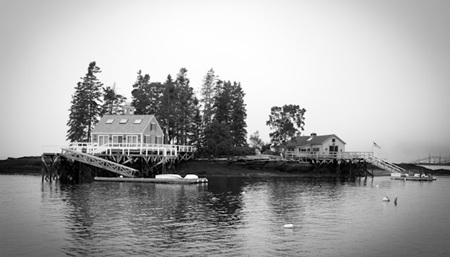
Caterpillar Island is off the central coast of Maine—beloved vacationland of lobster bakes and quaint fried clam shacks, kayaking and country houses. At night, though, by the light of a headlamp, the island is alive with cash, guns, and poachers. Oxy addicts, struggling retirees, and unemployable deadbeats dip their nets in the creeks to catch elvers—two-inch-long baby eels that fetch $2000 a pound on the international black market.
Into this dark and dangerous world falls Jeanette King, who has, up to this moment, been earning her meager living mainly by picking and packaging peekytoe crab meat for shipment to New York and Boston. As Jeanette gets drawn into a fast-moving story of risk and violent consequences, she enlists the aid of a local policeman and an Indigenous activist. Together they try to set things right for the people and the planet. But the deeper they dig, the more dangerous things get. An ensuing procession of colorful locals, corrupt state politicians, and treacherous outsiders weaves a tale that reveals the underbelly of a deadly business.
EXCERPT
As she turned into her driveway, she saw that a bright red Ford Mustang had beaten her to the only real parking space in front of her porch, so she stopped the car by the side of the road and got out.
Two men were seated on a little rusted wrought iron bench that ran along the porch wall outside her front door. One she recognized instantly—it was Joey Pizio. The man next to him was older, more broadly built, with a neatly trimmed beard and wraparound polarized shades. She had seen him before, around the lobster co-op, where he had started working a few years before, but she had never met him. He stood as she climbed the three steps to the porch. Joey stayed where he was.
“Jeanette King?” he said. “I believe you have something that belongs to us.” His voice was lacquered.
Jeanette took a breath. Her heart began to pound again, and her mouth was suddenly dry. She had managed to keep her composure with Joey on the boat, but now there were two of them.
The older one held out his hand.
“Bennett Tyson,” he said. “May we?” He gestured to the front door.
“I don’t think so,” she said. It was barely a croak. Who knew if he was armed or simply far stronger than she was. Beating up women was hardly an unknown phenomenon in her world, but generally it was a domestic matter. This was something different. Maybe he understood that, maybe not. He had introduced himself freely, which made it seem that he was looking for results, but perhaps not trouble.
“Bennett Tyson,” she said, letting him know that she’d heard the name clearly. “That doesn’t give me much to go on. Not the chicken family?”
Tyson smiled. “I’m a friend of your ex-husband,” he said. “And I think you know my associate, Joey.”
“I’ve known Joey since he was four. I hadn’t seen him in a while.” Joey looked down at his feet and squirmed. She wanted to help him. But she was in no position to, with his boss leaning on her. Maybe Joey was the only thing keeping her safe right now. She assessed the situation. Bennett wanted the money, but it seemed persuasion was his first line of attack. For now. Just put your hand up and ask, she told herself, like school. What can you lose?
“And what subject are we discussing?” There was a little more timbre in her voice and a little less open breath.
“Joey here made a mistake,” Tyson said smoothly. “Simple mistake. He was supposed to meet your husband early this morning, but he met you instead, that’s all. Then he made a couple assumptions he shouldn’t have made, and the result is—well, you know what the result is. Joey’s young, and sometimes things happen.”
Joey looked at his feet, staring down hard as if something might crawl out of his shoes. What kind of a mess had he gotten himself into? He was off-balance and waiting for this to be over. She was waiting for the same thing. But not by giving back the money. Not now.
“Let’s just say mistakes were made,” she said. “I might be the beneficiary.”
Bennett Tyson opened his mouth to speak, but Jeanette wasn’t finished. She suspected that he thought her an innocent bystander in whatever game he was playing, and likely to be a compliant and uninformed one. But it didn’t have to be that way. It was her front porch.
“Here’s my question,” she said. “If you’re using my ex-husband’s boat, how are you using my ex-husband?”
Tyson looked at her silently.
“What business is it of yours? Who says I’m using him for anything?” Tyson’s voice had a new edge. He took a step toward her.
“Don’t talk to her that way,” said Joey, still seated, looking down. Just this side of sulking.
“You can look at me, Joey. We’ve known each other a long time.” Joey reluctantly looked up, shoulders slumped, his face holding a blank stare. Shame or resentment? Maybe both.
“The boat has my name on it,” she said to Tyson. “And the man owes me lots of back alimony. Good enough?”
“That’s between you and him. But we pay him, not you. What he does with it is his business.”
Against her better judgment, Jeanette was beginning to enjoy herself.
“I pick crabs,” she said. “That’s my business. But I’m not a fool. There wasn’t but eight thousand, seven hundred and fifty dollars in the tackle box, and there must have been over ten pounds of elvers in the live well. Eighty-seven fifty makes my ex-husband some kind of delivery boy or something.”
“Ten K,” Tyson said. “There was ten.”
“Not the way I counted it,” Jeanette said.
Tyson took a deep breath, calculating. Then he turned to Joey, who had shrunk back into the decaying back support of the bench.
“That’s interesting,” he said to Joey.
Joey waited as long as he could.
“They’s gonna repossess my truck,” he said bleakly. “It was a short-term thing, I swear. A week. Two at the most. It was between me and Simon.”
Jeanette’s heart sank to her feet. Joey was in enough trouble without her volunteering how much money was in the tackle box. She’d just made it worse and for no reason.
“Hell,” said Tyson. “I don’t know what made you think you could keep up payments on that truck to begin with. Ma’am, can we go in the house and get the money? What’s left of it, I mean.”
Jeanette shook her head sadly, like Bennett was a little boy who’d peed in his pants.
“Men don’t understand,” she said. “They think a house is someplace you sleep, someplace you eat. Women don’t see it that way. To a woman—at least to this woman—a house is a fortress to be guarded. It’s the definition of who I am. The walls, the wallpaper, every chair and table, every dinner plate, the hooked rugs—it’s not to be violated. I am my house.”
Excerpt from The Glass Eel © 2025 by J.J. Viertel. All rights reserved.
Cover photo by Jeana Bala

You May Also Like
Book Spotlight | Burlington by Heather Dixon

Book Spotlight | The Body In The Reef by C. Fitton